
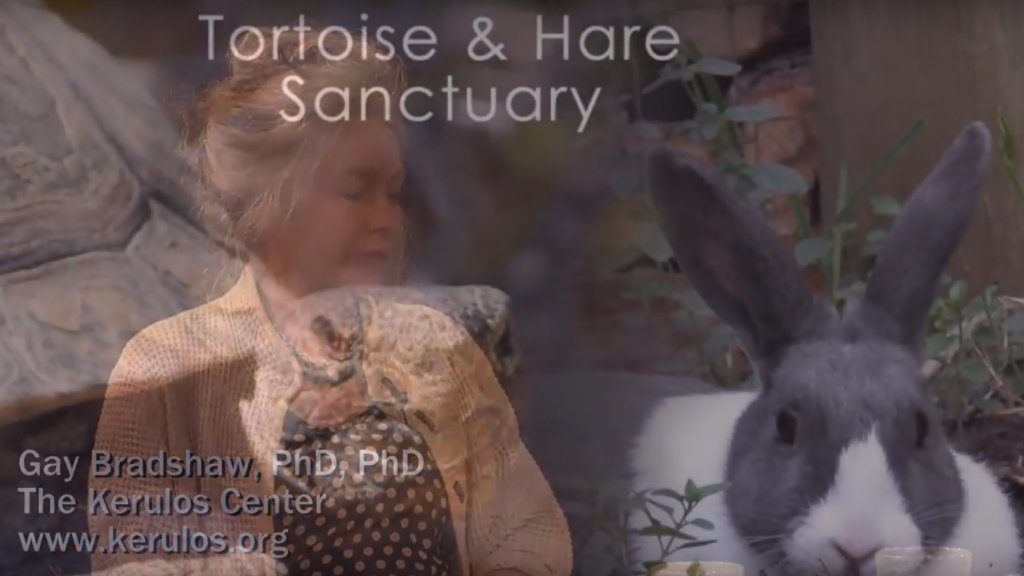
Gay Bradshaw, founder of The Kerulos Center, takes us on a tour of the Tortoise part of the sanctuary. Video by Wanda Borland, August 2018.
Gay Bradshaw, founder of The Kerulos Center, takes us on a tour of the Tortoise part of the sanctuary. Video by Wanda Borland, August 2018.
Gay Bradshaw, executive director of The Kerulos Center is interviewed by Alissa Weaver. They explore predator behavior and current federal and state policies that annually exterminate millions of native animals, and address whether coexistence can be achieved. July 7, 2018.
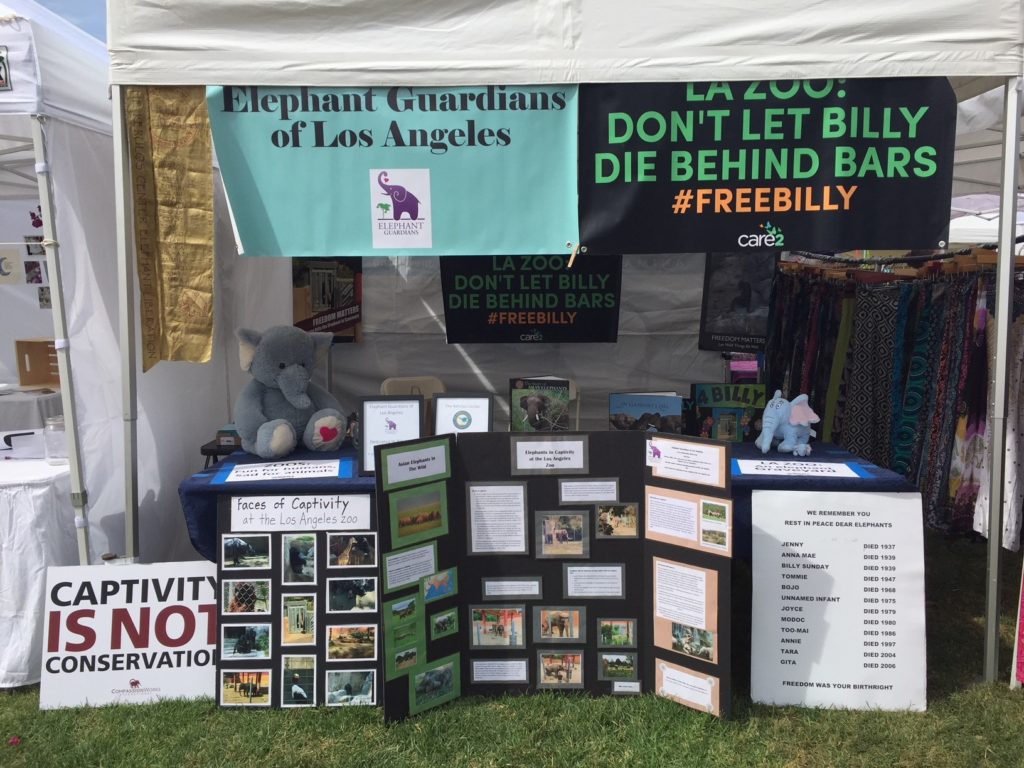
Elephant Guardians of LA and The Kerulos Center have partnered together in a campaign to release Billy the Elephant from the LA Zoo. Watch this video and learn why there is an urgency for Billy’s release.

Read Our Common Blood, a review by Gay Bradshaw of the book, Wolf Nation: the Life, Death, and Return of Wild American Wolves (Brenda Peterson).
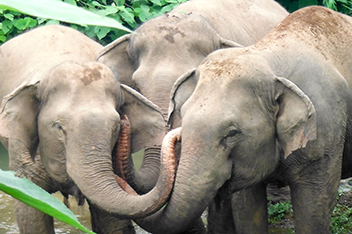
Zoos teach us a false sense of our place in the natural order. The means of confinement mark a difference between humans and animals. They are there at our pleasure, to be used for our purposes. Morality and perhaps our very survival require that we learn to live as one species among many rather than as one species over many. To do this we must forget what we learn at zoos. Because what zoos teach us is false and dangerous, both humans and animals will be better off when they are abolished. —Dale Jamieson
Kiersten Cluster is an Early Childhood Special Education teacher for the Los Angeles Unified School District. She teaches students ages three to five with moderate to severe disabilities. She holds a B.A. in English from U.C. Riverside, a J.D. from the U.C.L.A. School of Law, and a teaching credential and M.A. in Early Childhood Special Education from California State University, Northridge. She lives in Los Angeles with her husband Darryl and their two rescue dogs, Fiona and Marty. They also have two grown human children.
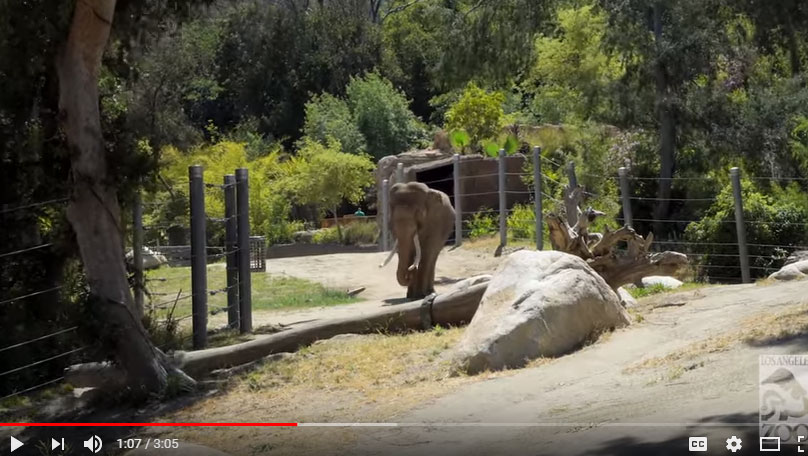
The Kerulos Center’s All Bull Elephants’ Sanctuary Center for Nonviolence (ABES) is being created to aid male Elephants suffering in North American zoos and circuses.
Published in Psychology Today: Read article.
Published in Psychology Today
There are more things in heaven and earth, Horatio, Than are dreamt of in your philosophy. – William Shakespeare, Hamlet (Act I, Scene 5)
Menopause is a subject that variously provokes jokes, distress, and disorientation. Read full article.

Tortoises always foresee obstacles. – D.H. Lawrence
After months of dreaming, Desert Tortoises have arrived at The Kerulos Center. To honor these magnificent beings, Executive Director Gay Bradshaw’s published the following essay in her Psychology Today blog, Bear in Mind.
Today, most impediments that Desert Tortoises encounter are not foreseeable. This ancient species did not evolve to withstand the brute force of vehicles that crisscross its southwestern U.S. habitat. Roads, cars, real estate development, climate change, the devastating exotic “pet” and product trades, and attendant slings and arrows of misfortune rendered by human hands are far too many and unrelenting for even the Tortoise to artfully dodge. [2, 3] Take, for instance, a group of Tortoises recently arrived in sanctuary. [4]
Last fall, 2013, the Desert Tortoise Conservation Consortium (DTCC) announced its pending closure as a result of funding cuts. [5] The DTCC is a consortium of organizations that includes the U.S. Fish & Wildlife Service, San Diego Zoo Global, and the Nevada Department of Wildlife whose primary mission is Desert Tortoise conservation. While healthy tortoises were reintroduced to their native wild, those with a history of abuse and neglect as “pets” were deemed unfit to survive on their own and threatened with euthanasia unless offered sanctuary. They now live at The Tortoise and the Hare Sanctuary in southern Oregon. [6]
 Some have lost a leg or arm, while others have suffered other deprivations. One Torotise had been kept in a closet for more than a year. The effect of such isolation is not only psychologically searing, but the lack of ultraviolet light (UVB) causes great damage to their shells. [7] Yet despite these life-threatening obstacles, none of the Tortoises have lost their zest, nor have their complex emotional lives been dampened.
The juxtaposition of “emotion” and “reptile” used to be regarded as a contradiction in terms. Tortoises and other reptiles are cold-blooded in physiology and metaphor. But standing science says otherwise. We humans share with Tortoises comparable cogs and machinations of the brain that govern sophisticated cognition, a rainbow of emotions, feelings, and even consciousness. Science’s findings have leveled species differences nearly to those between cultures. In the words of Dr. Erich Jarvis, professor of neurobiology at Duke University Medical Center:[8]
A reptile brain is analogous to a bird brain and both are analogous to mammalian brains which implies that reptiles may have parallel capacities to think, feel, experience consciousness, and related abilities to mentally function.
And there is certainly no doubt of Tortoise consciousness and emotions when visited up close and personal. Reptiles even reflect neuropsychological shaping described by modern attachment theory [9] and embodied lyrically by François Mauriac: “We are molded and re-molded by those who have loved us; and though the love may pass, we are nevertheless their work, for good or for ill.”
For example, one of the new sanctuary residents, Chosovi (Hopi for bluebird), is quite comfortable with humans and gravitates toward them for companionship. She lived with a human family for many years until relinquished.[4] While wildlife captivity definitionally constitutes a serious compromise mentally and physically, Chosovi’s relatively good health and relaxed, quiet inclination to the human species suggests that she received care and affection.
On the other hand, Hototo (Hopi for “warrior spirit who sings”) has a distinctly different personality. He is outgoing, confident, and strong.[4] Hototo is decidedly an extrovert who prefers the company of other Tortoises. This in part may be explained by a history of neglect. After arriving at the DTCC, he was diagnosed with uroliths (bladder stones) that form because of improper nutrition and sustained dehydration. Subsequently, one might hazard that Hototo’s neutral to indifferent attitude towards humans and his press to engage with other of his species may derive from a negative experience with humans and their inattention to his care.
Still, these are early days in sanctuary. In contrast to a cortisol study showing that Desert Tortoises experienced little stress from translocation, the Oregon arrivals showed psychological symptoms of stress their first two days in sanctuary. [10] Similar to ourselves, stress expresses in mind, action, and speech.
There is obviously more than meets the eye under those shells and in their beautiful minds. Our reptile kin teach us that even in silence there is a story.
References
 [1] Lawrence, D.H. 1921. Tortoises.

Strumming my pain with his fingers; Singing my life with his words; Killing me softly with his song; Killing me softly with his song; Telling my whole life with his words; Killing me softly with his song – Charles Fox and Norman Gimbel [1]
One night during those lazy, hazy, summer days, I went into the kitchen as dinner was being prepared. Strains of a Norwegian folksong that harkened icy blue fjords and greygreen cliffs floated through the air. This was the domain of an elderly Valkyrie who presided over cooking and cooks. She was standing by the white enameled stove where a metal pot frothed with boiling water. At first, I was perplexed but then saw what she was doing. She was holding and stroking a live Maine lobster while singing the haunting tune. Suddenly, she plunged the lobster into the boiling pot. I gasped in horror and instinctively stepped back. Stunned, nonetheless I managed to ask why she was doing what she did. She explained that the singing and stroking relaxed the crustacean creating a state of bliss that was preserved as tender flesh of unsurpassed flavor.
A child does not need to be taught to see the suffering of others. I knew then what scientists now declare: lobsters and other animals used for human consumption suffer just as we do under comparable conditions. All animals share with humans the brain structures and processes that govern feeling, thinking, and consciousness. [3, 4] So it is no stretch of the imagination that at the moment before immersion into death, the lobster felt a flash of confusion, stark fear, and betrayal. The well-known food chain, Whole Foods Market, concurs.
Eight years ago, Whole Foods “banned the sale of live lobsters and crabs. . . citing that transporting, storing, and cooking live animals was inhumane.” [5] This came after investigating “the biology and sentience in lobsters, including studying the final report of the November 2005 European Food Safety Authority Animal Health and Welfare panel which concluded all decapod crustaceans, including lobsters and crabs, are complex in behavior and appear to have some degree of awareness, feeling pain and having the ability to learn.” [6]
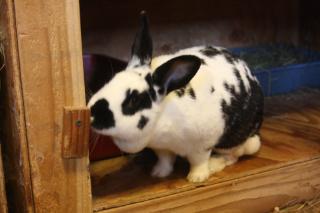
It is therefore staggering that Whole Foods now has embarked on a pilot rabbit program. No, the pilot rabbit program is not flight training for a species whose intellectual capabilities easily qualify them for such sophisticated tasks. Au contraire – the purpose of the program is to breed and kill rabbits to sell. The store maintains that welfare standards employed for rabbits” are designed around their instinctual behaviors . . . [to] ensure the overall health and well-being of the animals.” The condemned will be given fresh food, medical care, and attention to address “more than 75 species-specific requirements.” In some cases, the rabbits are afforded “pasture/outdoor access and management of outdoor areas, if applicable,” “twice daily inspections,” and even “toenail trimming” and “tooth trimming.” But facts provide a glimpse into the reality behind a carefully constructed illusion: Whole Foods’ requirement that slaughterhouses report rabbit “footpad lesions and abscesses” and “DOA’s (dead on arrival).” [7, 8]
Similar to prison camp authorities who had Liebesträume played for concentration camp prisoners, Whole Foods may try to convince themselves and others that condemned rabbits live a good life under the benevolent hand of humane humans. [9] However, as psychiatrist Robert Jay Lifton points out in his seminal treatise, The Nazi Doctors: Medical Killing and the Psychology of Genocide, such Orwellian doublespeak is a protective psychosocial device to mask reality. [10, 11] In Lifton’s terms, a psychological “doubling” permits the peaceful co-existence of reality and illusion–killing and care. The purpose of the Whole Foods rabbit program and that of concentration camps is one and the same: to maximize exploitation of the inmates and then kill them.
There is no welfare in animal welfare standards designed to optimize death. Whole Foods commits yet another ethical breach: appropriating and re-writing rabbit experience. Not only are they denied lives of dignity and freedom, the rabbits are denied their truth. Telling my whole life with his words, Singing my life with his words. Like the lobster strummed with dulcet tones and fingers, Whole Foods’ rabbits are killed softly, but certainly killed. [12]
Literature Cited
[1] Killing me softly. Recorded by Roberta Flack. 1973. http://www.youtube.com/watch?v=O1eOsMc2Fgg [2] Urban Dictionary. 2014. Sun is over the yardarm. http://www.urbandictionary.com/define.php?term=The+Sun+is+over+the+yardarm; retrieved July 6, 2014 [3] The Cambridge Declaration of Consciousness. 2012. http://fcmconference.org/img/CambridgeDeclarationOnConsciousness.pdf; retrieved July 6, 2014. [4] Bradshaw, G.A., and R. M. Sapolsky. 2006. Mirror, mirror. American Scientist, 94(6), 487-489.http://www.americanscientist.org/issues/pub/mirror-mirror-1 [5] Specter, D. 2014. Do lobsters feel pain? Business Insider. http://www.businessinsider.com/do-lobsters-feel-pain-2014-5#ixzz36ikfarfv retrieved July 6, 2014. [6] Whole Foods Market. 2006. Whole Foods Market stops selling live lobsters. http://www.wholefoodsmarket.com/mission-values/seafood-sustainability/whole-foods-market-stops-selling-live-lobsters; retrieved July 6, 2014. [7] House rabbit Society. 2014. Whole Foods responds to House rabbit Society. http://rabbit.org/whole-foods-respond-to-house-rabbit-society/; retrieved July 6, 2014. [8] Whole Foods Market Pilot Animal Welfare Standards for rabbits http://rabbit.org/articles/wp-content/uploads/2014/07/Whole-Foods-Market-Pilot-Animal-Welfare-Standards-for-rabbits-v1.03-September-20133.pdf [9] Fackler, G. 2007. Music in concentration camps 1933 – 1945. Music & Politics.tohttp://www.music.ucsb.edu/projects/musicandpolitics/archive/2007-1/fackler.html; retrieved July 6, 2014. [10] Lifton, R.J. 1988. The Nazi Doctors: Medical Killing and the Psychology of Genocide. Basic Books. [11] Bradshaw, G.A. 2009. Elephants on the edge: What animals teach us about humanity. New Haven: Yale University Press. [12] Demello, M. 2012. Speaking for animals: Animal autobiographical writing. Routledge.[NOTE: This article was first published as Killing Them Softly: Optimizing Death in the Food Industry on July 6, 2014 in Psychology Today]